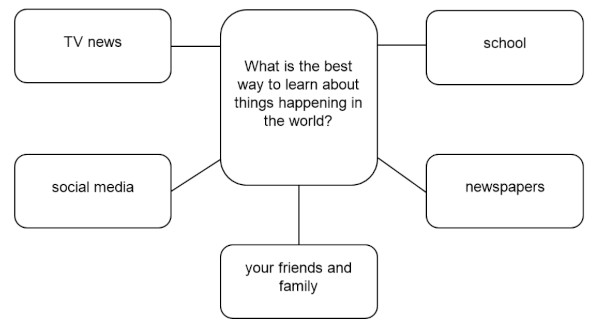
Speaking Part 3 of the Cambridge B2 First (FCE) exam is often called the collaborative task. In this part, two candidates work together to discuss a topic, exchange ideas, and reach a decision. The task is designed to test how well you can communicate interactively, not just how well you speak on your own.
This part is administered and assessed by Cambridge Assessment English, and it plays an important role in your overall Speaking score.
Overview of Speaking Part 3
Aspect
Details
Time
About 4 minutes (for a pair of candidates)
Interaction
Candidate ↔ Candidate
Task type
Discussion + decision-making
Materials
Visual prompt (usually 5–6 options with a question)
Main focus
Collaboration, turn-taking, and negotiation
What Happens in Part 3?
Stage
What You Do
1. Instructions
The examiner gives you a question and shows you a visual prompt with several ideas.
2. Discussion
You discuss the ideas with your partner, giving opinions, agreeing or disagreeing.
3. Decision
You try to reach a conclusion together (e.g. choose the best option).
You are not expected to agree immediately. In fact, showing polite disagreement and building on your partner’s ideas is a positive sign.
What the Examiners Are Looking For
Assessment Area
What It Means in Practice
Interactive Communication
Responding to your partner, asking questions, inviting opinions
Fluency & Coherence
Speaking smoothly and linking ideas clearly
Vocabulary & Grammar
Using a range of language accurately
Pronunciation
Being clear and easy to understand
💡 Important: Speaking a lot is not enough—you must speak with your partner, not at them.